gold leaf screen wallpaper backdrop - byobu stock pictures, royalty-free photos & imagesGold leaf screen wallpaper backdrop
Byobu Screen at Shogakuan - This sub temple of Tofukuji has been around since 1290, but it's only open for visits in November and always for the...Byobu Screen at Shogakuan - This sub temple of Tofukuji has
'Irises', One pair of six-section folding screens , ink and color on paper with gold leaf background, Ogata Korin , Edo Period, c. 1705, Nezu Art...Japan: 'Irises', One pair of six-section folding screens (byobu), ink and color on paper with gold leaf background, Ogata Korin (1568 - 1716), Edo Period, c. 1705, Nezu Art Museum, TokyoJapan, Ogata Korin
Trees. A six-section folding screens, Mid of 17th cen. Found in the collection of Freer Gallery of Art, Washington, D.C..Trees. A Six-Section Folding ScreensJapan, Landscape - Scenery, Tree
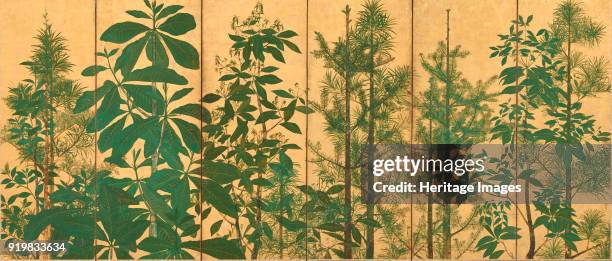
Trees, Early 17th cen.. Artist: Master of I-nen SealTrees, Early 17th cen.. Found in the collection of the Freer Gallery of Art, Washington, D.C..
Hie Sanno Sairei-Zu, 17th century. Found in the collection of the Museum of Fine Arts, Houston.Hie Sanno Sairei-Zu, 17th century. Artist: AnonymousJapan
japanese iris flower exhibition - byobu stock pictures, royalty-free photos & imagesJapanese Iris Flower ExhibitionNihonga
Scenes from the Nakamura Kabuki Theatre, one from a pair of six-panel byobu folding screens; ink and color on gold-leafed paper, Moronobu Hishikawa ,...Japan: Scenes from the Nakamura Kabuki Theatre, one from a pair of six-panel byobu folding screens; ink and color on gold-leafed paper, Moronobu Hishikawa (1618-1694), c. 1670-1680Art, Kabuki
Visitor stands next to a Japanese folding screen or "byobu" at the Uffizi Gallery in Florence, Italy, on Dec. 4, 2017. ==KyodoJapanese screen at Uffizi Gallery
The main hall at Kaizoji is called Ryugoden - the building was constructed in 1925, two years after the Great Kanto Earthquakeb which had destroyed...The main hall at Kaizoji is called Ryugoden - the building
Paintings on the interior byobu of the Kuri, the main temple building. Ryan-ji is a Zen temple located in northwest Kyoto. The temple and its gardens...Paintings on the interior byobu of the Kuri, the main temple
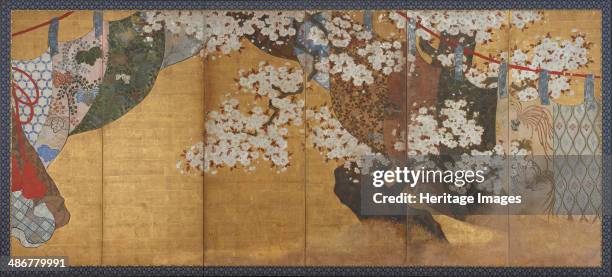
Wind-screen and cherry tree. Artist: AnonymousWind-screen and cherry tree. Found in the collection of the Freer Gallery of Art, Washington, D.C..
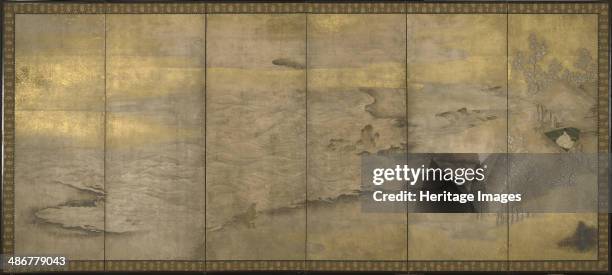
Waves at Matsushima, Early 17th cen.. Artist: Sotatsu, TawarayaWaves at Matsushima, Early 17th cen.. Found in the collection of the Freer Gallery of Art, Washington, D.C..
Flowering Plants in Autumn, 18th century. Artist: Korin, OgataFlowering Plants in Autumn, 18th century. Found in the collection of the Suntory Museum of Art.
Mount Fuji and the moon, ca 1760. Artist: AnonymousMount Fuji and the moon, ca 1760. Found in the collection of the Art Gallery of South Australia.
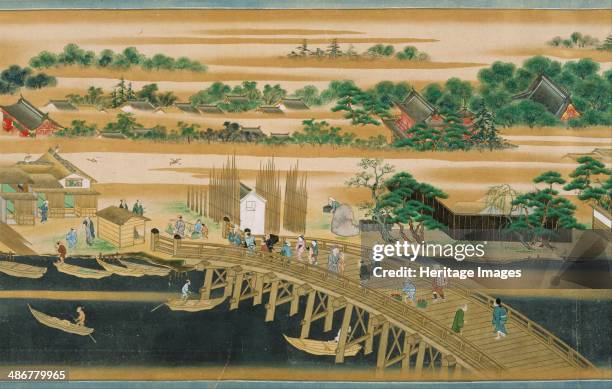
The River Bridge at Uji, 1568-1615. Artist: AnonymousThe River Bridge at Uji, 1568-1615. Found in the collection of the Nelson-Atkins Museum of Art, Kansas City, Missouri.
An Exiled Emperor on Okinoshima, ca. 1600. Artist: AnonymousAn Exiled Emperor on Okinoshima, ca. 1600. Found in the collection of the Kimbell Art Museum.
Pine Trees , 16th century. Found in the collection of the Tokyo National Museum.Pine Trees (Left of a pair of six-section folding screens), 16th century. Artist: Hasegawa, Tohaku (1539-1610)Japan
Cranes, End of 17th-Early 18th cen. Found in the collection of the Freer Gallery of Art, Washington, D.C.. Artist Korin, Ogata .CranesUkiyo-e
portrait of young woman in ‘furisode’ kimono looking over shoulder in front of golden ‘byobu’ folding screen for ‘seijin shiki’ coming-of-age ceremony - byobu stock pictures, royalty-free photos & imagesPortrait of young woman in ‘Furisode’ kimono looking over shoulder in front of golden ‘Byobu’ folding screen for ‘Seijin Shiki’ coming-of-age ceremony
ina river and byobu rocks, minamiaizu, fukushima, japan - byobu stock pictures, royalty-free photos & imagesIna River and Byobu Rocks, Minamiaizu, Fukushima, Japan
Whale. Folding screen, 1797. Found in the collection of Miho Museum, Koka.Whale. Folding ScreenIto Jakuchu
The main hall at Kaizoji is called Ryugoden - the building was constructed in 1925, two years after the Great Kanto Earthquakeb which had destroyed...The main hall at Kaizoji is called Ryugoden - the building
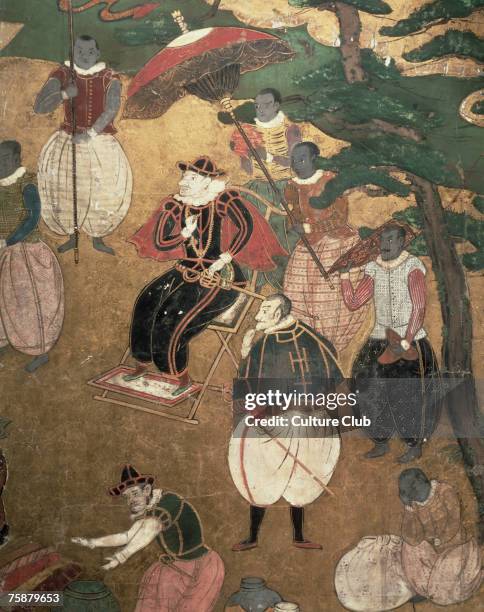
The Arrival of the Portuguese in Japan, detail of the Portuguese from a Namban Byobu screen, 1594-1618Museu Nacional de Soares dos Reis, Porto, Portugal
The Arrival of the Portuguese in Japan, detail of shops from a Namban Byobu screen, 1594-1618Museu Nacional de Soares dos Reis, Porto, Portugal
Legend of Muge Hoju no Tama. Detail of a Japanese folding screen of the XVIIIth century, at the Museum of Eastern art in Venice, Italy.Legend of Muge Hoju no Tama
The Arrival of the Portuguese in Japan, detail of the Portuguese commanding the disembarkation from a Namban Byobu screen, 1594-1618Museu Nacional de Soares dos Reis, Porto, Portugal
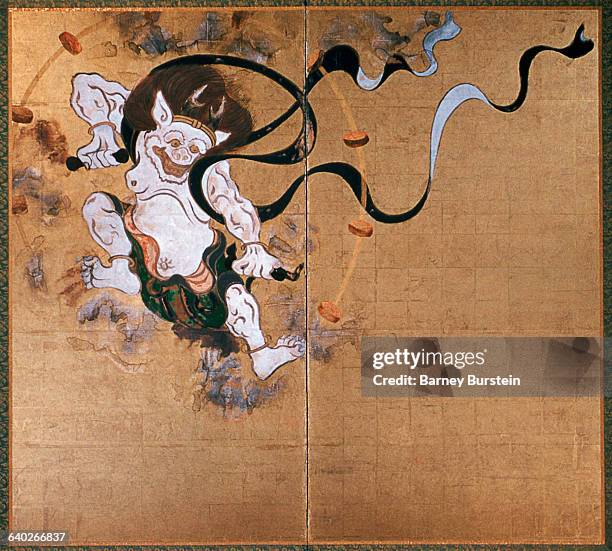
Detail of Raijin, the God of Thunder from Fujin Raijin Byobu by SotatsuDetail of Raijin, the God of Thunder from Fujin Raijin Byobu by SotatsuTawaraya Sotatsu
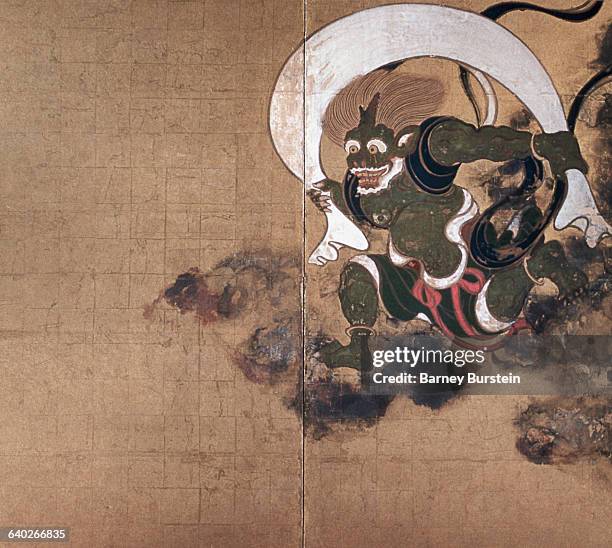
Detail of Fujin, the God of Wind from Fujin Raijin Byobu by SotatsuDetail of Fujin, the God of Wind from Fujin Raijin Byobu by Sotatsu
Arrival of a Portuguese ship. Nanban screen, ca. 1600. Found in the collection of Rijksmuseum, Amsterdam. Artist : Anonymous.Arrival of a Portuguese ship Nanban screen, ca 1600Portuguese Culture, Japan, Ferdinand Magellan
Arrival of a Portuguese ship. Nanban screen. Detail: Japanese Christians, ca. 1600. Found in the collection of Rijksmuseum, Amsterdam. Artist :...Arrival of a Portuguese ship Nanban screen Detail: Japanese Christians, ca 1600Portuguese Culture
Arrival of a Portuguese ship. Nanban screen, ca. 1600. Found in the collection of Asian Art Museum, San Francisco. Artist : Anonymous.Arrival of a Portuguese ship Nanban screen, ca 1600Portuguese Culture, Ferdinand Magellan, Japan
Byobu, literally "wind wall" are Japanese folding screens made from several joined panels bearing decorative painting and calligraphy, used to...Byobu, literally "wind wall" are Japanese folding screens
The Arrival of the Portuguese in Japan, detail of the Portuguese ship, from a Namban Byobu screen, 1594-1618Museu Nacional de Soares dos Reis, Porto, Portugal
Sailors at work on the masts of the ship, detail of the Arrival of the Portuguese in Japan, painted for a Namban Byobu-style screen. Japan, 16th...Sailors at work on the masts of the ship
a naturally-lit interior view shows a hand-painted byobu folding screen room divider inside manshuin temple, located in the northeast area of kyoto, japan. - byobu stock pictures, royalty-free photos & imagesA naturally-lit interior view shows a hand-painted byobu folding screen room divider inside Manshuin Temple, located in the northeast area of Kyoto, Japan.
Paintings on the interior byobu of the Kuri, the main temple building. Ryan-ji is a Zen temple located in northwest Kyoto. The temple and its gardens...Paintings on the interior byobu of the Kuri, the main temple
Paintings on the interior byobu of the Kuri, the main temple building. Ryan-ji is a Zen temple located in northwest Kyoto. The temple and its gardens...Paintings on the interior byobu of the Kuri, the main temple
Summer and autumn flower plants. . Artist: Hoitsu, SakaiSummer and autumn flower plants. (Part of the pair of two-fold screens). Found in the collection of the Tokyo National Museum.Japan
Summer and autumn flower plants. . Artist: Hoitsu, SakaiSummer and autumn flower plants. (Part of the pair of two-fold screens). Found in the collection of the Tokyo National Museum.
Waves at Matsushima, Early 17th cen.. Artist: Sotatsu, TawarayaWaves at Matsushima, Early 17th cen.. Found in the collection of the Freer Gallery of Art, Washington, D.C..
Trees, Early 17th cen.. Artist: Master of I-nen SealTrees, Early 17th cen.. Found in the collection of the Freer Gallery of Art, Washington, D.C..
Millet and Birds, ca 1625. Artist: AnonymousMillet and Birds, ca 1625. Found in the collection of the Art Gallery of South Australia.
Millet and Birds, ca 1625. Artist: AnonymousMillet and Birds, ca 1625. Found in the collection of the Art Gallery of South Australia.
Autumn landscape with wild geese, c. 1650. Artist: AnonymousAutumn landscape with wild geese, c. 1650. Found in the collection of the Art Gallery of South Australia.
Famous Sites of the Sumida River, Second Half of the 18th cen.. Artist: AnonymousFamous Sites of the Sumida River, Second Half of the 18th cen.. Found in the collection of the Suntory Museum of Art.Edo Period
Musashino, 17th century. Artist: AnonymousMusashino, 17th century. Found in the collection of the Suntory Museum of Art.
Phoenixes by Paulownia Trees, 17th century. Artist: Tan'yu, KanoPhoenixes by Paulownia Trees, 17th century. Found in the collection of the Suntory Museum of Art.
Birds and Flowers of Spring and Summer, Second Half of the 17th cen.. Artist: Eino, KanoBirds and Flowers of Spring and Summer, Second Half of the 17th cen.. Found in the collection of the Suntory Museum of Art.Japan, Painting - Art Product, Bird
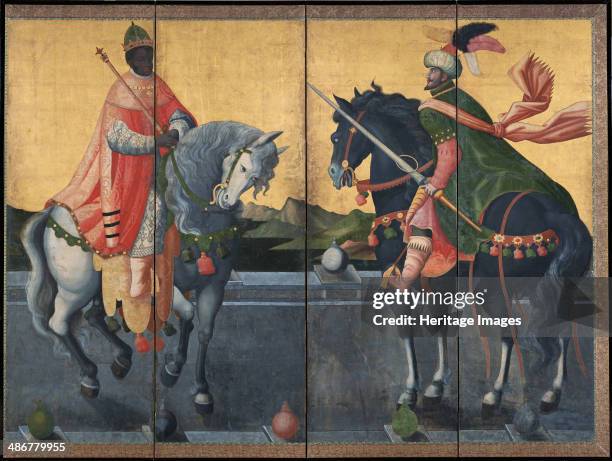
Western Kings on Horseback, First third of 17th cen.. Artist: AnonymousWestern Kings on Horseback, First third of 17th cen.. Found in the collection of the Suntory Museum of Art.
Namban Screens, First third of 17th cen.. Artist: Sanraku, KanoNamban Screens, First third of 17th cen.. Found in the collection of the Suntory Museum of Art.Japan, Screen Partition
The plain of Musashi, ca 1760. Artist: AnonymousThe plain of Musashi, ca 1760. Found in the collection of the Art Gallery of South Australia.
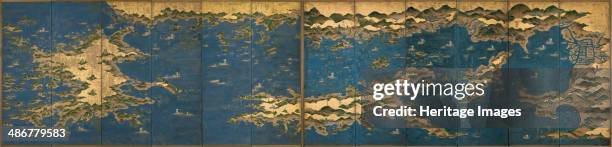
Seto Inland Sea, Second Half of the 17th cen.. Artist: AnonymousSeto Inland Sea, Second Half of the 17th cen.. Found in the collection of the Art Gallery of South Australia.Painting - Art Product
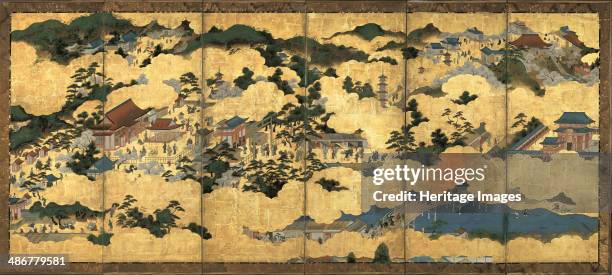
Scenes in and around Kyoto, ca 1690. Artist: AnonymousScenes in and around Kyoto, ca 1690. Found in the collection of the Art Gallery of South Australia.Japan
Scenes in and around Kyoto, ca 1690. Artist: AnonymousScenes in and around Kyoto, ca 1690. Found in the collection of the Art Gallery of South Australia.
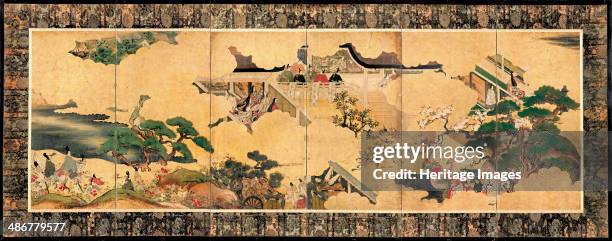
Scenes from The tale of Genji , 17th century. Artist: AnonymousScenes from The tale of Genji (Genji monogatari), 17th century. Found in the collection of the Art Gallery of South Australia.The Tale of Genji, Japan